Best AI Music Video Generators 2026: Audio Sync, Lip Sync and Full Workflows Compared
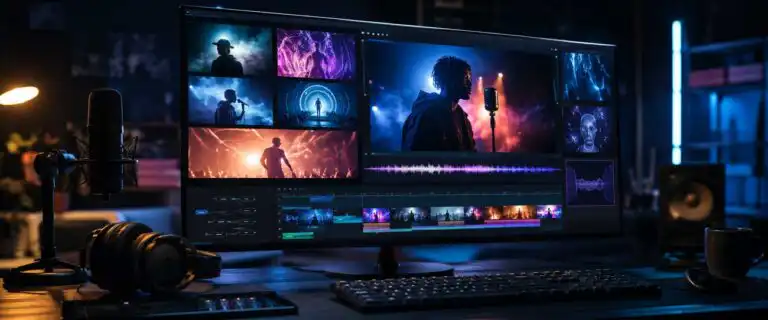
The best AI music video generator in 2026 is Neural Frames for artists who want a complete song-to-video workflow with beat analysis, lyric timing, lip sync, character control and a storyboard they can edit before committing to the final render. Freebeat is the stronger one-click option for fast, full-length performance or narrative videos, while Kaiber remains the best creative workspace for stylised visuals built around a track.
This comparison separates complete music-video platforms from audio-reactive visualisers and general AI video models. Accepting an MP3 does not automatically make a tool music-aware. A useful platform must understand sections, preserve a visual idea throughout a whole song, handle lyrics or performance shots, and leave enough editing control to fix weak scenes without having to rebuild everything.
We judge each option on beat and section detection, lip sync, lyric timing, scene continuity, character preservation, chorus and verse variation, editing after generation, export formats, commercial-use terms and likely cost per publishable minute. Readers who mainly need individual cinematic shots should start with our comparison of the best AI video generators, as this page places more weight on the full-song workflow than on raw clip quality.
Quick verdict: which AI music video generator should you choose?
| Tool | Best for | Music awareness | Lip sync | Full-song workflow | External editor? |
|---|---|---|---|---|---|
| Neural Frames | Best overall controlled workflow | Strong stem, rhythm, lyric and structure analysis | Vocal Video mode | Yes | Optional for final finishing |
| Freebeat | Best one-click music video | Strong automated song-section planning | Core feature for singing videos | Yes, up to six minutes | Usually no, but useful for polish |
| Kaiber | Best stylised and artwork-led visuals | Beat Sync plus audio-led Music Video Montage | Not its main strength | Yes, but Montage is limited to one, two or three minutes | Optional for Montage, useful for precise edits |
| Rotor Videos | Best stock-footage and lyric video workflow | Analyses tempo, speed and intensity for edit timing | No performance lip sync | Yes, up to ten minutes | No for straightforward releases |
| Runway | Best manual production workspace | No complete song-structure workflow | Strong specialist tools | No automatic full-song build | Yes for a serious music video |
| Kling | Best motion-heavy generated shots | Clip-level audio and motion, not song direction | Useful, model dependent | No | Yes |
| Plazmapunk | Best low-cost full-track experiment | Beat-reactive full-song generation | Limited | Yes | Optional, depending on quality target |
The best-looking eight-second clip and the best three-minute music video are often produced by different tools. Music-video ranking should reward the system that gets an entire track over the finish line, not the model with the strongest demo reel.
The three types of AI music video tool are not interchangeable
1. General video models create shots, not finished music videos
Runway, Kling, Veo, Luma and similar models can produce striking footage. They are useful for a close-up of a singer, a choreographed movement, a surreal transition or a cinematic establishing shot. Most still work in short clips, however. They do not automatically decide where the first chorus should introduce a new location, where a bridge should be visually restrained, or which character should reappear in the final refrain.
These tools suit directors and editors who already think in shot lists. The workflow is to plan the song, generate each shot, reject weak takes, then assemble everything in Premiere Pro, DaVinci Resolve, Final Cut Pro or another editor. The quality ceiling can be high, but the labour and credit cost are also highest.
2. Audio-reactive generators make visuals respond to the music
Audio-reactive platforms analyse rhythm, frequency, intensity or separate stems and use those signals to drive movement. A kick drum can trigger a pulse, vocals can alter colour or distortion, and a drop can increase motion. Neural Frames and Kaiber are strongest in this category.
This is ideal for electronic music, ambient tracks, DJ backdrops, psychedelic visuals and artwork-led releases. It is less automatically suited to a narrative video. A visualiser can be perfectly synchronised and still feel repetitive after ninety seconds if it has no scene progression.
3. Full music-video platforms direct and assemble the song
Neural Frames, Freebeat, Rotor Videos and Plazmapunk attempt the full job. They accept a track, analyse it, create or select scenes, align cuts and return a complete video. The stronger platforms also expose a storyboard, lyrics, characters, aspect ratios and scene-level regeneration.
The main trade-off is creative authorship. Automation reduces editing time, but it may produce literal lyric interpretation, generic emotional arcs or repeated visual motifs. The best full-song platform is therefore not the one with the fewest buttons. It is the one that lets you intervene before expensive rendering begins.
How we evaluate a full-song AI video workflow
Our music-specific framework does not reuse a general video model for ranking. It evaluates the production chain from finished master to publishable export and penalises tools that shift too much work into a separate editor.
- Song understanding: Does the tool identify more than BPM? Useful systems recognise intros, verses, choruses, bridges, drops, energy changes and lyrical emphasis.
- Timing quality: Cuts should land on musically meaningful events without turning every beat into a transition.
- Performance credibility: Lip sync must follow phonemes, while facial expression, head movement and body motion should still look intentional.
- Continuity: The artist, clothing, locations, and visual language should remain consistent across dozens of generated clips.
- Editorial control: A storyboard, scene regeneration and replaceable clips matter more than a long list of style presets.
- Delivery: Horizontal, vertical and square versions should not require rebuilding the entire project.
- Commercial practicality: The platform terms, uploaded-song rights, stock licences and watermark rules must suit release and monetisation.
- Accepted-minute cost: Failed generations, rerenders and external editing count. Advertised subscription price alone does not.
1. Neural Frames – best overall AI music video generator
Neural Frames has the most complete balance of automation and intervention. Autopilot analyses the lyrics, mood, BPM and song structure, creates a concept and storyboard, then lets the user review scenes before rendering. It supports classic videos, lyric-focused output and Vocal Video projects where selected character shots sing along with the track.
The deeper advantage is the editor underneath Autopilot. Neural Frames can separate a track into eight stems and map musical elements such as drums, bass and vocals to visual parameters. It also offers a timeline-based workflow with several video models, character references, up to three controlled characters, scene regeneration and 4K upscaling. This gives it a wider range than one-click tools: it can make an abstract visualiser, a lyric video, a character-led narrative or a hybrid of all three.
The storyboard stage is where money can be saved. A four-minute AI video may contain around forty-eight generated clips and keyframes. Approving the starting images before animation catches wardrobe inconsistencies, duplicate locations, and broken character design, while those mistakes are still relatively cheap to fix. Neural Frames also provides a limited number of free rerenders based on video length, reducing the penalty when a section fails.
The limitation is cost predictability. Credit use changes with track length, model choice, keyframes and video technique. Autopilot is available across plans, but the company recommends a higher credit allowance for regular use. An artist making a single release should preview the full project cost before rendering, rather than assuming the entry plan will cover a polished, full song.
| Neural Frames strengths | Neural Frames limitations |
|---|---|
| Best combination of song analysis, storyboard control and full-length rendering Stem-driven audio reactivity Lyric and vocal-video modes Character controls and multiple underlying video models Horizontal, vertical and high-resolution delivery | Credit use varies substantially by model and song length More controls mean a longer learning curve Character consistency still needs human review across a long project Higher plans make more sense for frequent Autopilot use |
Best for: independent artists, labels, and visual creators who want a single platform for full-song automation but refuse to surrender scene-level control.
2. Freebeat – best one-click generator for lip-synced full songs
Freebeat is built around the shortest path from song to complete video. It analyses musical structure and energy, creates a visual concept and shot plan, then assembles a full-length result. Its current workflow supports videos up to six minutes, multiple aspect ratios, animated lyrics and performance-led modes.
Lip sync is the main reason to choose it over a pure visualiser. Freebeat positions its singing workflow around phoneme-level timing rather than a basic open-and-close mouth animation. It can also preserve an uploaded or generated character across a long sequence, making it better suited to virtual artists, AI musicians, and creators who want the same performer to survive through verse, chorus, and bridge.
The automation is both the attraction and the risk. A system that plans dozens of shots quickly can also settle on an obvious interpretation of the lyrics or overuse the same visual intensity. Review the proposed concept before the full render. The first chorus should establish the visual payoff, while later choruses should vary framing, location, movement or colour without abandoning the central identity.
Freebeat offers a free entry point and credit-based paid tiers. Its own current guidance places a typical three-minute generation in a broad credit-cost range rather than a fixed fee. Treat that as a base render estimate, not a finished production budget. Character corrections, regenerated performance shots and final grading can still add cost.
| Freebeat strengths | Freebeat limitations |
|---|---|
| Fastest route to a complete performance-led video Full-song output up to six minutes Music-section planning and beat-aware pacing Lip sync, lyrics and persistent characters in one workflow Useful exports for YouTube, Shorts, TikTok and Reels | Less granular than Neural Frames for frame-level audio reactivity Automated concepts can feel generic without direction Provider accuracy claims should be checked against the language and vocal style in your own track Credit cost rises when consistency fixes require rerenders |
Best for: musicians who need a finished video quickly, particularly singing-avatar, lyric-led, Suno or Udio workflows where manual editing is not the main skill.
3. Kaiber – best for stylised, music-led visual direction
Kaiber has changed more than older comparisons suggest. Its Canvas workspace already combines generation, Beat Sync, and editing, but the Music Video Montage workflow, released on 8 July 2026, adds a direct song-to-video route. Users can upload audio, describe the visual direction, optionally add a reference image, and generate a one-, two-, or three-minute video in different resolutions and aspect ratios.
This makes Kaiber much easier to recommend for short singles, album teasers and visual tracks. It remains strongest when the artist begins with a clear visual identity: cover artwork, a character portrait, a collage, a colour system or a recognisable illustration style. The wider Canvas can also access multiple image and video models, refine generated assets and apply beat-aware editing around the song.
Music Video Montage deliberately removes the need for a timeline and clip-by-clip workload. That is useful for speed, but it also limits precise control. Because the workflow is only a week old at the time of this update, its stability and credit economics are less well proven than those of longer-established alternatives. It is not yet the safest choice for a four-minute narrative release, and lip-synced performance is not its core advantage. The three-minute ceiling also needs to be checked against the master before committing.
Kaiber uses credits, and model choice makes spending less predictable than a fixed-price download. The practical approach is to develop still references and a short visual test before generating the full Montage. Repeatedly changing the style after animation is the expensive way to discover that the initial art direction was wrong.
| Kaiber strengths | Kaiber limitations |
|---|---|
| Strong visual identity and style-led output New direct Music Video Montage workflow Beat Sync, Editor and Canvas in one creative environment Reference-image support Useful for artwork animation and non-literal music visuals | Montage is limited to one, two or three minutes Lip sync is not the main reason to subscribe Precise song-section direction is weaker than a full storyboard editor Credit consumption can discourage experimentation |
Best for: electronic artists, producers, experimental musicians and anyone with strong cover art who wants a visually distinctive result rather than a conventional singer performance.
4. Rotor Videos – best for reliable stock-footage and lyric videos
Rotor Videos solves a different problem. Instead of asking a generative model to invent every frame, it analyses the music and assembles an edit from licensed stock footage, user-uploaded clips, visual styles and filters. Its library contains millions of clips, and the system uses the song’s speed, tempo and intensity to decide how the edit should move.
The result has a lower generative ceiling but a higher floor. Hands do not mutate, faces do not drift, and a location does not change architecture halfway through a shot. For an official release that needs to look coherent rather than visibly AI-generated, this can be a better business decision than spending days rerolling cinematic clips.
Rotor is also unusually transparent about per-project pricing. A music video up to 10 minutes costs 3 credits, while an AI lyric video costs 4 credits. Current bundles price credits at roughly $6 to $9 each, so the base music-video download is about $18 to $27 before premium clips or styles. For a three-minute song, that is approximately $6 to $9 per finished minute. A lyric video is roughly $24 to $36 before extras.
Rotor is not suitable for a recurring fictional artist, a surreal generated world or a convincing lip-synced performance. It is strongest when the artist values predictable delivery, wants to mix their own footage with stock, or needs a lyric video without manually timing every line.
| Rotor strengths | Rotor limitations |
|---|---|
| Predictable fixed project cost Full songs up to ten minutes Large stock library and user-footage support Automatic music-led editing Dedicated lyric, artwork, social and Spotify Canvas formats | Not a high-end generative video model No character generation or singer lip sync Stock choices can feel familiar if not curated carefully Premium content adds credits |
Best for: musicians who need a dependable official video, lyric release, or promotional edit and would rather avoid the failure rate associated with fully generated footage.
5. Runway – best for editors building a high-end video shot by shot
Runway is the strongest option here for people who already understand editing and visual production. It offers high-quality video models, reference-led generation, image-to-video, performance and lip-sync tools, asset management and editing features in one workspace. It is suitable for hero shots that need precise camera movement, a controlled singer close-up or a polished transition that must fit an existing edit.
It ranks below the music-first platforms because it does not direct an entire song. The user still needs a section map, shot list, continuity plan and final timeline. Runway can reduce the number of applications involved, but it does not remove the editorial work that makes a verse feel different from a chorus.
The cost should be calculated per accepted second. Runway’s current pricing equates 2,250 credits to about 187 seconds of Gen-4.5, or roughly 12 credits per generated second. At the monthly Standard-plan credit value, one raw minute would consume more than the included 625 credits and would cost around $17 in credits. If only half the generated footage survives the edit, the model cost per accepted minute is closer to $34 before upscaling, other tools, and editing time.
This is why a more expensive model can still be good value for a small number of hero shots but poor value as the only engine for a three-minute video. Use Runway where quality is visible, then fill less critical transitions with cheaper or automated footage.
Best for: directors, agencies, and experienced creators who want the most control over individual shots and expect to finish in Premiere Pro, DaVinci Resolve, or a comparable editor.
6. Kling – best for dance, movement and physically ambitious shots
Kling earns a place because music videos often fail on motion. Walking, dancing, turning, interacting with props, and moving the camera around a performer quickly expose weak physics. Kling is one of the stronger general models for these demanding shots and can preserve a reference subject more convincingly than lighter social generators.
It is still not a full music video platform. Direct use means generating short sections, matching them to a planned timeline and assembling the results elsewhere. Audio-capable versions can help at clip level, but they do not replace song analysis, lyric timing or complete section-aware editing.
Kling can also be accessed inside wider creative platforms, including music-specific workflows. That may be the smarter route for a full song because the outer platform handles the storyboard and audio while Kling supplies selected shots. Use it for the chorus dance sequence, action-heavy inserts and cinematic movement rather than forcing every scene through the same model.
Best for: generated performance footage where body movement and camera motion matter more than one-click assembly.
7. Plazmapunk – best budget full-track generator
Plazmapunk offers a straightforward full-song workflow: upload a track, choose a style and generate a beat-reactive video. Paid plans add all aspect ratios, a scene editor, preview images, Full HD upscaling, watermark removal and a commercial licence. Its entry paid plan is currently €9.99 per month, with a limited free tier for testing.
The scene editor is an important feature. A one-prompt full track is fast, but it gives the model too much freedom to repeat ideas or miss the song’s emotional progression. Splitting the track into several deliberate scenes lets the user reserve the strongest concept for the chorus and reduce motion during quieter sections.
Plazmapunk does not offer the same production depth as Neural Frames or the same performance focus as Freebeat. Lip sync is limited, and the underlying visual quality may not match a carefully assembled Runway or Kling project. Its appeal is value: it provides full-track generation, audio reactivity and scene control without requiring a high monthly commitment.
Best for: first-time users, experimental releases and musicians who want to prove a visual concept before paying for a more advanced production workflow.
8. Solmi – best for editable music videos with lip-sync and consistent characters
Solmi is an AI music video generator that turns a finished song into a fully edited music video using an agent-directed workflow: upload an MP3 or paste a Suno, YouTube or TikTok link, and Solmi transcribes the lyrics, maps the tempo and song sections, writes a visual treatment, casts consistent characters and renders a final cut synced to the beat. Lyric detection works across multiple languages, and vocal sections get lip-synced performance shots rather than generic b-roll.
The main difference from one-click tools is what happens after the first render. Solmi keeps the project as an editable storyboard: you can reroll any individual shot, change a scene with a natural-language note, and keep the shots you like. Characters stay visually consistent across scenes instead of morphing between cuts. Export supports 16:9 and 9:16 for YouTube, TikTok and Reels.
Solmi also bundles a music studio around the video tool, including AI song generation, AI covers, a vocal remover and a stem splitter, so a track can go from idea to finished video without leaving the platform. There is a free tier with trial credits, while paid plans and credit packs unlock 720p/1080p rendering, private projects and clean audio downloads.
| Strengths | Limitations |
|---|---|
| Shot-by-shot editing with natural-language notes Consistent characters and lip-sync across scenes Imports from Suno/YouTube/TikTok links, multi-language lyrics Built-in song generation, covers, vocal remover, stem splitter | Full-quality renders consume credits quickly Rendering a full song takes longer than one-click visualizers Newer tool with a smaller template community |
Best for: independent artists who want a lip-synced, story-driven music video they can direct and revise shot by shot, rather than a single-pass visualizer.
Cost per finished minute is more useful than subscription price
AI video pricing is easy to underestimate because platforms sell generation rather than acceptance. A failed clip still consumes credits. So does a visually attractive scene that cannot be used because the artist’s face changed, the mouth missed the vocal, or the camera movement clashes with the edit.
Use this calculation for every project:
Cost per accepted minute = generation spend + rerenders + upscaling + project share of editing software, divided by publishable minutes.
| Workflow | Base cost visibility | Likely cost behaviour | Hidden cost |
|---|---|---|---|
| Neural Frames | Project total varies by length and selected model | Efficient when storyboard approval prevents full rerenders | High-end models and long songs consume credits quickly |
| Freebeat | Credit estimate for the full song | Low base cost when the first automated direction is usable | Character and performance corrections |
| Kaiber | Credit-based and model dependent | Good for short, style-led Montage projects | Testing styles after animation has started |
| Rotor Videos | Fixed credits per downloaded project | About $18 to $27 for a standard full music video at current bundle rates | Premium footage or styles |
| Runway | Clear seconds-per-credit guidance | High for full songs, sensible for selected hero shots | Rejected footage and external editing time |
| Kling | Varies by model, duration and access platform | Best budgeted shot by shot | Continuity retries and final assembly |
| Plazmapunk | Low monthly entry price with monthly credits | Good for testing a complete concept cheaply | Replacing weaker scenes in another tool |
A recurring real-world complaint is that creators compare plan prices only to discover that rejected shots consume most of the budget. The corrective is simple: generate and approve still keyframes first, use expensive models only for visible hero moments, and record the acceptance rate from the first project. Your own acceptance rate predicts future cost better than any provider’s credit headline.
See more of our reporting in Google Top Stories, AI Overviews and AI Mode.
Do you still need Premiere Pro or DaVinci Resolve?
For a straightforward visualiser, lyric video or automated social release, no. Neural Frames, Freebeat, Kaiber Montage, Rotor and Plazmapunk can produce a complete export. A separate editor becomes valuable once the project needs intentional pacing, precise colour, multiple deliverables, label graphics, end cards, clean audio mastering or replacement shots from different models.
The most dependable professional workflow remains hybrid:
- Use a music-first platform to analyse the track, create a storyboard and establish edit timing.
- Approve characters, locations and starting frames before animation.
- Generate the majority of scenes inside the main platform.
- Replace weak hero shots with Runway, Kling or another specialist model.
- Finish the master in an editor where frame-level cuts, audio, titles and colour can be checked together.
- Create vertical and square versions only after the horizontal master is locked.
This avoids paying for three minutes of premium-model footage while preserving a high visual ceiling that viewers will notice.
Commercial rights involve more than the video platform
A provider may grant commercial rights to generated visuals while the uploaded song, sampled audio, performer likeness, reference photographs or stock assets remain restricted. Keep separate records for each element. The video-tool licence does not clear a song you do not own, and owning the master recording does not automatically mean you control every composition, sample or featured performance.
Before publishing, confirm:
- You have the necessary rights to the master recording and composition.
- Any samples, cover-song permissions or third-party vocals are cleared for video use.
- Uploaded artist photographs and character references can be used commercially.
- The chosen subscription tier permits commercial output and removes watermarks.
- Stock footage is licensed for the intended platform, territory, paid advertising and client use.
- AI-generated likenesses of performers do not imitate a real person without permission.
- The final upload is checked for Content ID claims and regional restrictions.
YouTube’s guidance on claimed music explains that rights holders can monetise, block or restrict videos containing protected tracks. Adding a credit in the description does not replace permission or a valid licence.
A better workflow for a three-minute AI music video
Map the song before choosing a visual model
Mark the intro, verses, pre-choruses, choruses, bridge, instrumental sections and outro. Add energy notes and identify the one or two lyrical moments that deserve literal treatment. Most lyrics should not be illustrated word-for-word. That approach quickly becomes predictable and can make serious songs look like visual karaoke.
Build a character and style pack
Prepare several reference images with the same face, hair, wardrobe and colour palette. Include close-up, medium and full-body views. Decide which details are fixed and which may change between sections. A character reference cannot compensate for contradictory prompts that describe different clothing or ages from one shot to the next.
Design chorus variation before generating it
Repeated choruses should feel connected, not duplicated. Keep one recurring element, such as a location, lighting motif, or camera move, and then change the scale or perspective. The first chorus may reveal the main setting, the second may intensify movement, and the final chorus may combine the performance and narrative threads.
Approve keyframes before spending on motion
A weak still rarely becomes a strong video. Check faces, hands, typography, props, background logic and costume continuity before animating. This is also where DIY AI’s image and video tools can help compare models and develop consistent source frames before committing to the expensive part of the workflow.
Create one master, then derive the social versions
Generate for the main release format first, normally 16:9. Keep the performer and essential action near the centre so a 9:16 crop remains possible. Automatic reframing is useful, but it cannot recover a guitarist, lyric caption or story clue that was composed at the far edge of the original frame.
Which tool is best for each type of music video?
| Project | Best starting point | Recommended workflow |
|---|---|---|
| Official narrative single | Neural Frames | Storyboard the full song, then replace the most important shots with specialist models where needed. |
| Virtual singer or lip-synced performance | Freebeat or Neural Frames | Use close and medium performance shots selectively. Continuous lip sync for three minutes can look more artificial than a normal music-video edit. |
| EDM, ambient or psychedelic visualiser | Neural Frames or Kaiber | Drive effects from stems or beat intensity and create planned visual changes at section boundaries. |
| Lyric video | Neural Frames or Rotor Videos | Choose Neural Frames for generated backgrounds and more creative control, Rotor for a faster, dependable release. |
| Stock-footage official video | Rotor Videos | Curate footage carefully, upload unique artist clips and avoid relying only on the default library selection. |
| Cinematic hand-edited video | Runway plus Kling | Plan shots externally, use Runway for controlled production and Kling for motion-heavy scenes, then edit manually. |
| Low-cost first experiment | Plazmapunk | Test the full visual concept before moving weak scenes into a more expensive generator. |
| Short artwork-led release | Kaiber Music Video Montage | Use a strong cover-art reference and keep the track within the one, two or three-minute output options. |
Common mistakes that make AI music videos look unfinished
- Cutting on every beat: Constant edits remove contrast. Save faster cutting for transitions, fills, drops and chorus peaks.
- Using a single visual treatment for the whole song: A three-minute track still needs progression, even when the style remains consistent.
- Generate the full song before approving the look: resolve character, wardrobe, lighting, and locations in still frames first.
- Making every vocal line a lip-sync shot: Performance works better when mixed with B-roll, narrative inserts and non-singing reactions.
- Starting separately in three aspect ratios: Finish one master and adapt it. Three independent generations rarely match.
- Ignoring typography until the end: Lyric videos need safe areas, readable contrast and line timing designed from the start.
- Comparing credits rather than accepted footage: Track how much generated material makes it into the final timeline.
- Assuming commercial use covers the song: Visual output rights and music rights are separate.
Frequently asked questions
What is the best AI music video generator in 2026?
Neural Frames is the best overall choice for a complete, editable music-video workflow. It combines song analysis, storyboarding, lyrics, vocal lip-sync, character control, audio-reactive effects, and full-length exports. Freebeat is better for fast one-click generation, while Kaiber is the stronger choice for stylised music visuals.
Can AI generate a complete music video from one song?
Yes. Neural Frames, Freebeat, Rotor Videos and Plazmapunk can produce a full-song video. Kaiber Music Video Montage supports one, two or three-minute videos. General models such as Runway and Kling normally create individual shots that must be assembled manually.
Which AI music video generator has the best lip sync?
Freebeat is the strongest one-click option for a singer-led full video, while Neural Frames provides more control over which scenes use Vocal Video lip sync. Runway and specialist character tools can create strong individual performance shots, but they do not automatically direct the complete song.
What is the best free AI music video generator?
Freebeat, Neural Frames, and Plazmapunk offer limited free access for testing, but a watermark-free full-length release generally requires a paid plan or credits. Our guide to free AI video generators covers a broader range of clip tools, although most free plans are too limited for a complete song.
Can I make a music video without editing software?
Yes, particularly with Freebeat, Rotor Videos, Neural Frames Autopilot, Kaiber Montage or Plazmapunk. A dedicated editor is still recommended for a professional master because it provides precise cuts, colour correction, titles, end cards, audio checks and easier replacement of weak scenes.
How much does an AI music video cost?
A simple stock-led Rotor music video currently costs about $18 to $27 before premium extras. Automated generative videos may cost only a few dollars in base credits, but rerenders can raise the total. A manually assembled Runway or Kling production can cost far more because every accepted minute may require two or more minutes of generated footage.
Final verdict
Choose Neural Frames when the video must follow a whole song, and you want to review the storyboard, preserve characters, control lyrics and repair individual scenes. Choose Freebeat when speed and singing performance matter more than frame-level direction. Choose Kaiber for stylised, artwork-led releases, and Rotor Videos when predictable cost and dependable delivery take precedence over generative ambition.
Runway and Kling remain valuable, but they should be treated as production engines rather than automatic music-video directors. The strongest professional workflow is usually a music-first platform for structure, specialist models for a small number of hero shots, and a conventional editor for the final master. That combination controls cost without making the entire video look automated.
You Might Also Like:

Best AI Video Generators

Best Image To Video AI

Best Free AI Video Generators 2026