8 platforms to track ChatGPT rankings for brand and comms teams (2026)
A sales lead forwards a prospect’s ChatGPT answer about your company. It names a product you retired last year, and the prospect took it at face value. That’s when ChatGPT rankings stop being an SEO metric and become a comms problem.
44% of US adults say they use ChatGPT. In Gartner’s survey, 45% of 645 B2B buyers used GenAI primarily to gather information on vendors and products, and 51% say they’re more likely to encounter misleading information from GenAI.
Brand and comms teams check their standing when something happens: a launch, a rival taking the category answer, a wrong fact, or a source shaping the answer. The table comes first, then the four jobs and the platforms suited to each.
ChatGPT rankings platforms at a glance
The table maps eight platforms to the brand-team job each handles best: launch week, competitor displacement, wrong facts, or cited sources. Columns show what each records from ChatGPT answers, its accuracy or tone signal, and entry price. “Not published” marks undisclosed details.
|
# |
Platform |
Best-fit job |
What it tracks in ChatGPT |
Accuracy or tone signal |
Starting price |
|
1 |
SE Visible by SE Ranking |
All four jobs |
Mentions, average position, sources |
Net sentiment, stored answers |
Free trial; plans on site |
|
2 |
Bluefish |
Wrong facts |
Claims, citations |
Claim accuracy |
Not published |
|
3 |
Goodie |
Wrong facts |
Narrative coverage |
Inaccuracy rate |
Core $295/month |
|
4 |
Brandlight |
Cited sources |
Source influence |
Sentiment, bias score |
Not published |
|
5 |
Evertune |
Competitor displacement |
Attribute benchmarks |
Not published |
Pro $800/month |
|
6 |
Profound |
Launch week |
Answers, Shopping |
Sentiment |
Trial, then custom |
|
7 |
Scrunch |
Competitor displacement |
Persona placement |
Sentiment |
Core $250/month |
|
8 |
Writesonic |
Launch week |
Visibility, ads |
Sentiment (Growth) |
Growth $399/month, annual |
Job 1: launch week, and whether ChatGPT names the new product
Add launch prompts on ship day, then let daily checks show whether ChatGPT names the product. Compare its average position against the incumbents, and keep stored answers as a dated record of how the description shifts. That record becomes your launch-week baseline for ChatGPT rankings.
Product and catalogue brands have a second lever: OpenAI says merchants share product feeds so ChatGPT can represent their catalogues, so the feed belongs on the launch checklist.
Daily checks and per-engine average position sit in SE Visible. Profound adds ChatGPT Shopping; Writesonic pairs launch content with ads monitoring.
Job 2: a competitor takes your place in a category answer
When a rival overtakes you in ChatGPT rankings, benchmark AI share of voice topic by topic, not across the whole prompt set. You’ll see which brands now own each category answer and which attributes ChatGPT credits them with, such as price, support, or integrations.
OpenAI says “Ads do not influence the answers ChatGPT gives you”, so an ad can’t buy the organic mention back.
Evertune benchmarks attributes with repeated sampling. Scrunch splits answers by persona. SE Visible compares competitors per topic, including brands outside your tracked set.
Job 3: ChatGPT gets facts about the brand wrong
Wrong facts in ChatGPT, such as an outdated price or a retired product, call for a four-step repair. Catch the wrong claim, trace it to its source page, correct that page, then recheck the same prompts after the next data collection.
OpenAI says “ChatGPT also hallucinates”: on its SimpleQA example, gpt-5-thinking-mini had a 26% error rate versus 75% for o4-mini. A corrected page reaches ChatGPT search summaries only if OAI-SearchBot isn’t blocked.
For AI reputation management, Bluefish traces each wrong claim to its source URL, and Goodie reports inaccuracy rate plus adverse citation share. SE Visible’s stored, unedited answers and net sentiment show the wording and tone.
Job 4: the sources ChatGPT cites, and which to pitch
Start by listing the third-party pages ChatGPT cites for your category. Flag the ones naming competitors but not you. Each needs a call: pitch the publisher for inclusion, or update a page you own. That shortlist is what AI citation tracking is for.
A preprint by University of Toronto researchers reports AI search shows a systematic bias toward earned, third-party media over brand-owned content.
In SE Visible, cited-source analysis shows domains and URLs by engine, and the “Brand is mentioned” filter isolates pages that mention competitors but not you. Brandlight adds a Source Impact Score and publisher partnership rankings.
The 8 platforms ranked for ChatGPT rankings work
SE Visible sits first because one stored-answer record covers all four jobs: answers collected in ChatGPT’s own interface, average position per engine, net sentiment, cited sources, and competitors topic by topic. The other seven each go deeper on a single job, from claim accuracy to publisher influence and attribute benchmarking.
1. SE Visible
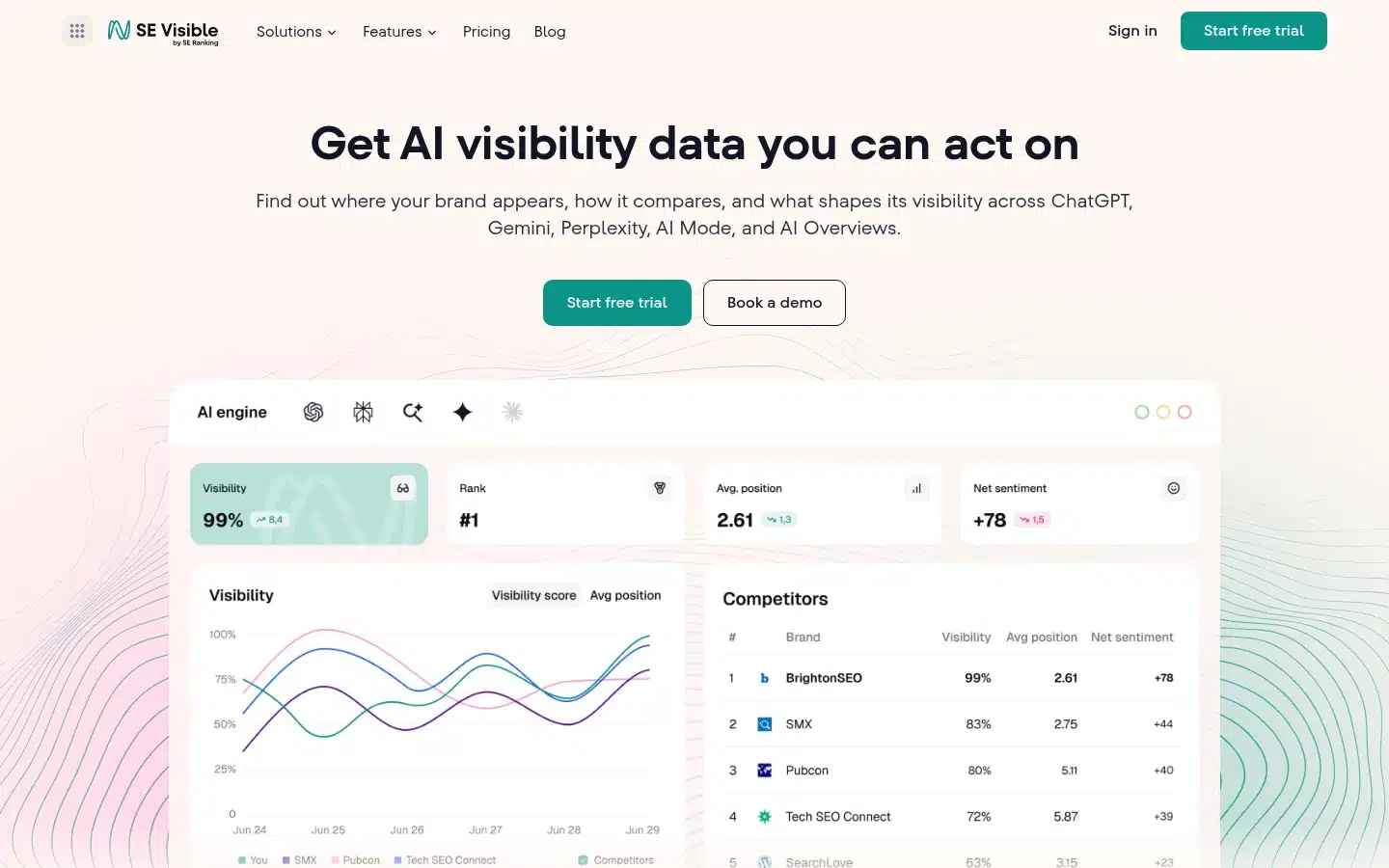
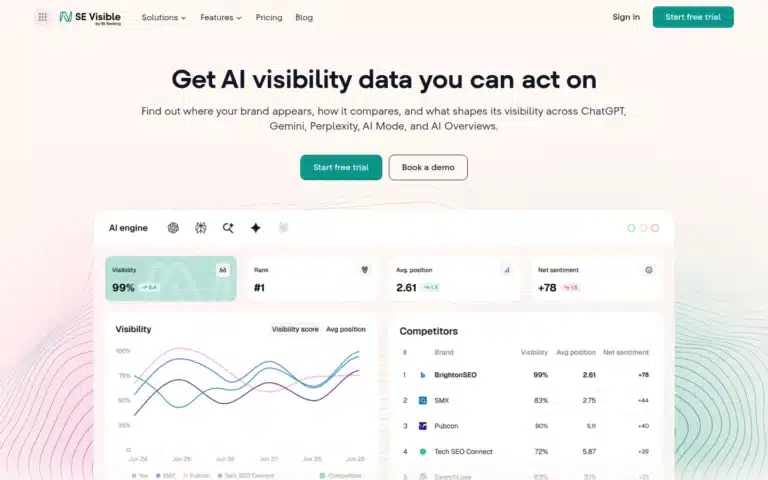
When three teams each quote a different ChatGPT answer about the brand, nobody knows which one is current. SE Visible by SE Ranking, the AI visibility platform, keeps a record of what ChatGPT says about your brand across tracked prompts.
Best for: In-house brand, PR, and content teams at larger organisations sharing one record of ChatGPT answers.
Standout: ChatGPT answers are gathered in a real browser session, then kept unedited with engine, market, and collection date, so comms reads the wording a buyer would see. Net sentiment, from -100 to +100, is calculated apart from the visibility score. ChatGPT gets its own trend line, separate from Gemini, Google AI Overviews, and AI Mode.
Pros:
- Benchmarks competitors topic by topic, plus the most-mentioned brands beyond your tracked set
- Filters cited sources with “Brand is mentioned” to find pages naming rivals but skipping you
- Tracks daily by default, adjustable in project settings, in one country, city, or region per project, with Looker Studio, CSV/XLSX, and an API on all plans
Cons:
- Accuracy review is a reading job: wrong claims surface in stored answers and net sentiment, not a separate fact-check score
- In-app report building is still developing; leadership decks get assembled in Looker Studio or from API and CSV/XLSX pulls
Pricing: New teams get a free trial first; current plan details sit on visible.seranking.com.
Scenario fit: If your brand, comms, and content leads need to read the same ChatGPT answer when a launch lands or a wrong fact spreads, SE Visible gives them one shared record. See how PR and brand teams set it up. SE Ranking covers Google and other traditional search engines, so the pair spans AI answers and classic results.
2. Bluefish
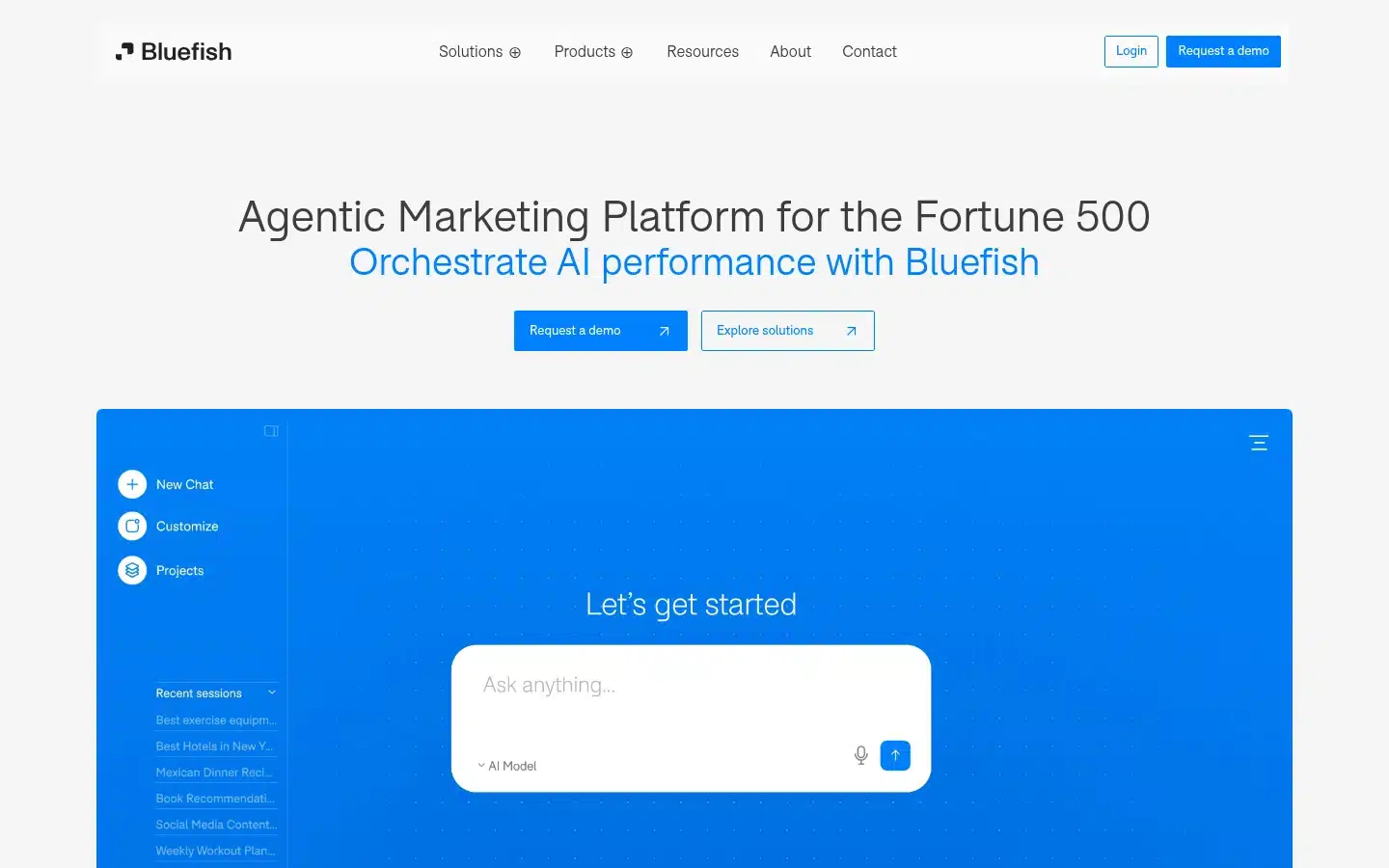
Bluefish starts with one brand question: Is what AI says about us true?
Best for: Corporate comms teams in regulated or claim-heavy categories.
Standout: AI Accuracy checks each claim AI makes about the brand against a verified source of truth and traces every inaccurate claim to its URL. Visibility and share of voice break out by customer persona, refreshed daily across more than 10 models.
Pros:
- Checks claims against your verified facts
- Links each wrong claim to its source page
- Splits share of voice by customer persona
Cons:
- Pricing sits behind a demo
- Alerts and data export are not stated on its public pages
Pricing: Not published; demo first.
Scenario fit: Bluefish suits Job 3 when a wrong spec, price, or policy keeps reappearing in ChatGPT brand mentions and comms needs the exact page to correct. Ask in the demo how flagged claims reach your team, since alerts aren’t described publicly.
3. Goodie
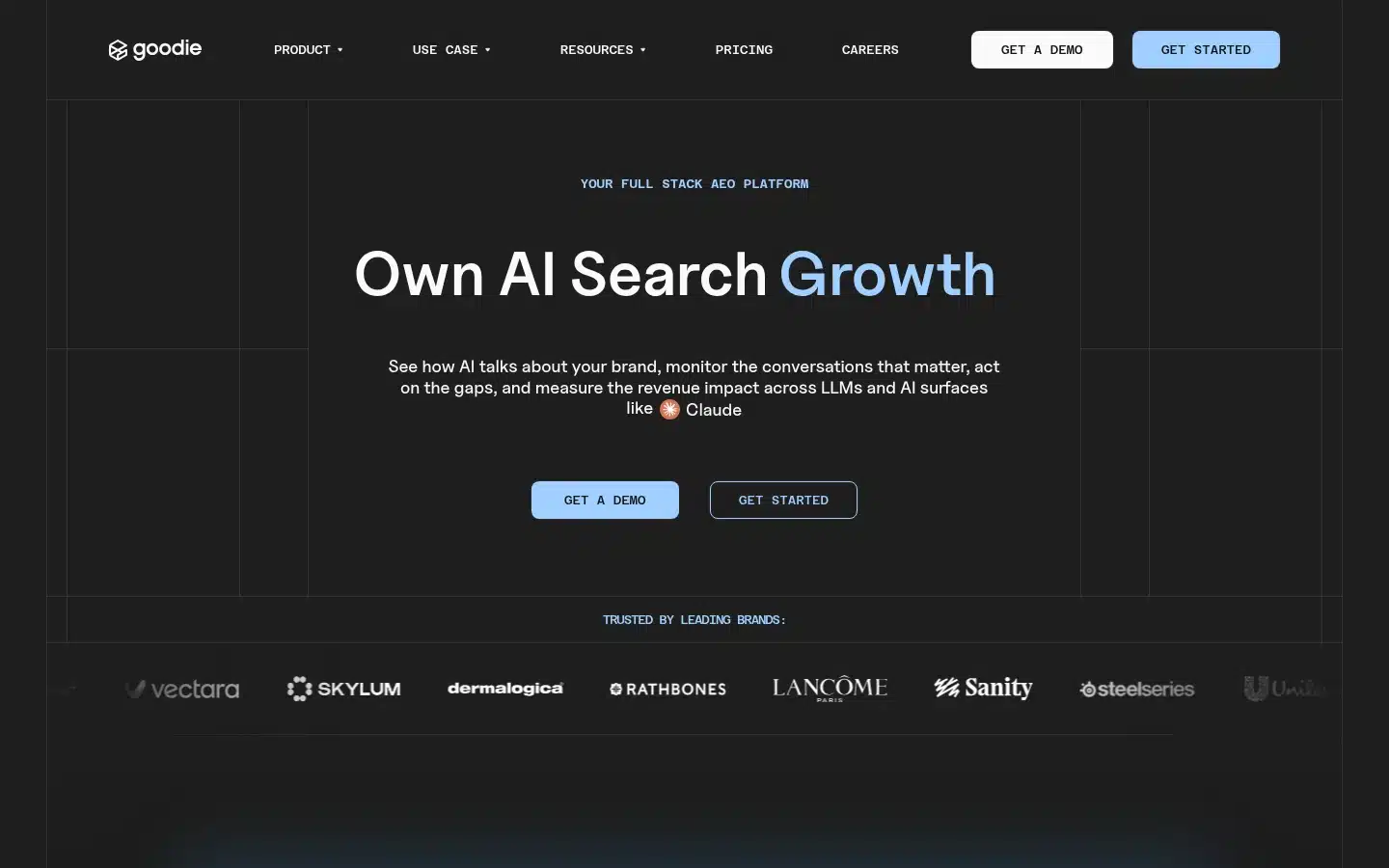
Brand pillars you define are the yardstick in Goodie.
Best for: Messaging leads who own a written narrative framework.
Standout: Brand Command reports four measures against the pillars you set: inaccuracy rate, narrative coverage, recommendation rate, and adverse citation share. Daily checks run across ChatGPT, AI Overview, Perplexity, AI Mode, and Copilot on Core, while Pro adds Gemini, Alexa, and Sparky.
Pros:
- Measures how often answers carry core messages
- Flags citations working against the brand
- Offers MCP access on Core and Pro
Cons:
- Export and API sit on Enterprise only
- Core and Pro each cover a single brand
Pricing: Core $295/month (110 prompts); Pro $999/month (250 prompts).
Scenario fit: Teams that already maintain messaging pillars can use Goodie for Job 3, with AI brand tracking scored against them. Multi-brand portfolios, and teams feeding a BI stack, should price the Enterprise tier from the start, since export and API live there.
4. Brandlight
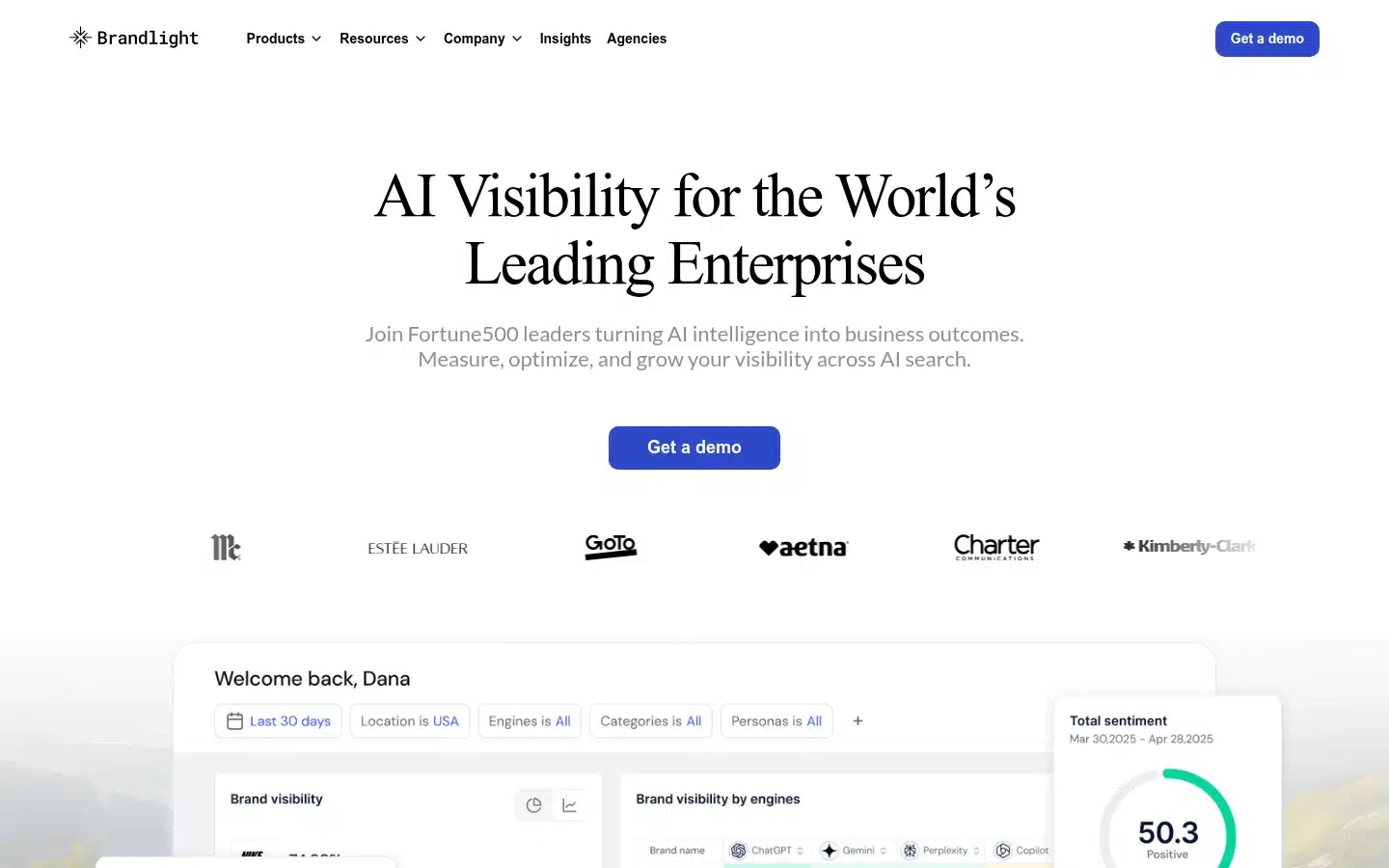
Brandlight treats AI answers as an earned-media question and points PR at the publishers behind them.
Best for: PR directors running earned-media and publisher partnership programs.
Standout: A Source Impact Score shows how much specific websites shape AI’s view of your brand, and the Partnerships module ranks third-party publishers and formats. Direct bias score, sentiment, and mention frequency sit alongside, across ChatGPT, Gemini, Perplexity, Copilot, Grok, and Claude.
Pros:
- Scores how strongly individual sites shape answers
- Ranks publishers and formats for placement planning
- Supports multi-region, multi-lingual programs
Cons:
- Cadence and pricing aren’t stated on its public pages
- Export and API aren’t stated either
Pricing: Not published; a demo is required to see plans.
Scenario fit: For Job 4, Brandlight helps a PR director decide which outlets deserve the next pitch, because its ranking ties publishers and formats to AI visibility. Confirm the refresh cadence before building a monthly comms readout on its scores.
5. Evertune
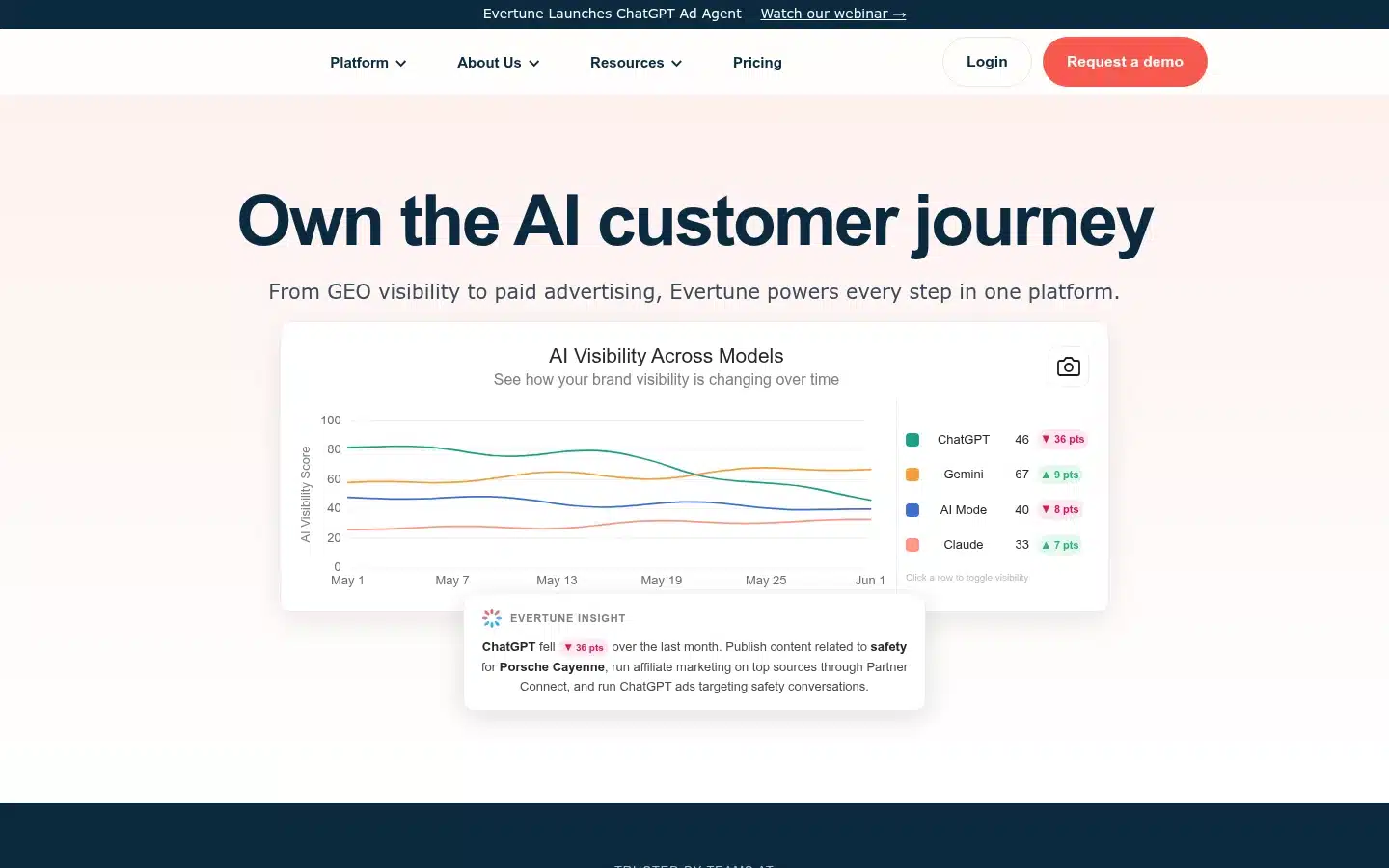
Where most platforms count mentions, Evertune reads competitors by attribute.
Best for: Brand strategists defending category positioning against named rivals.
Standout: Evertune says it runs each prompt as many as 100 times per model and maps Performance by Attribute against named competitors across 11 models. That turns a drop in ChatGPT rankings into a question a brand team can act on: which attribute did the rival take?
Pros:
- Benchmarks attributes against each category competitor
- Scores brand visibility per model
- Lets you choose daily, weekly, or monthly tracking
Cons:
- Export and API aren’t stated on its public pages
- Collection surface isn’t stated on its public pages
Pricing: Pro $800/month (100,000 prompts, 11 models); Enterprise custom.
Scenario fit: Evertune fits Job 2 once a rival starts owning words like “reliable” or “enterprise-ready” in category answers. Teams reporting through a data warehouse should confirm export routes early, since the public pages leave that open.
6. Profound
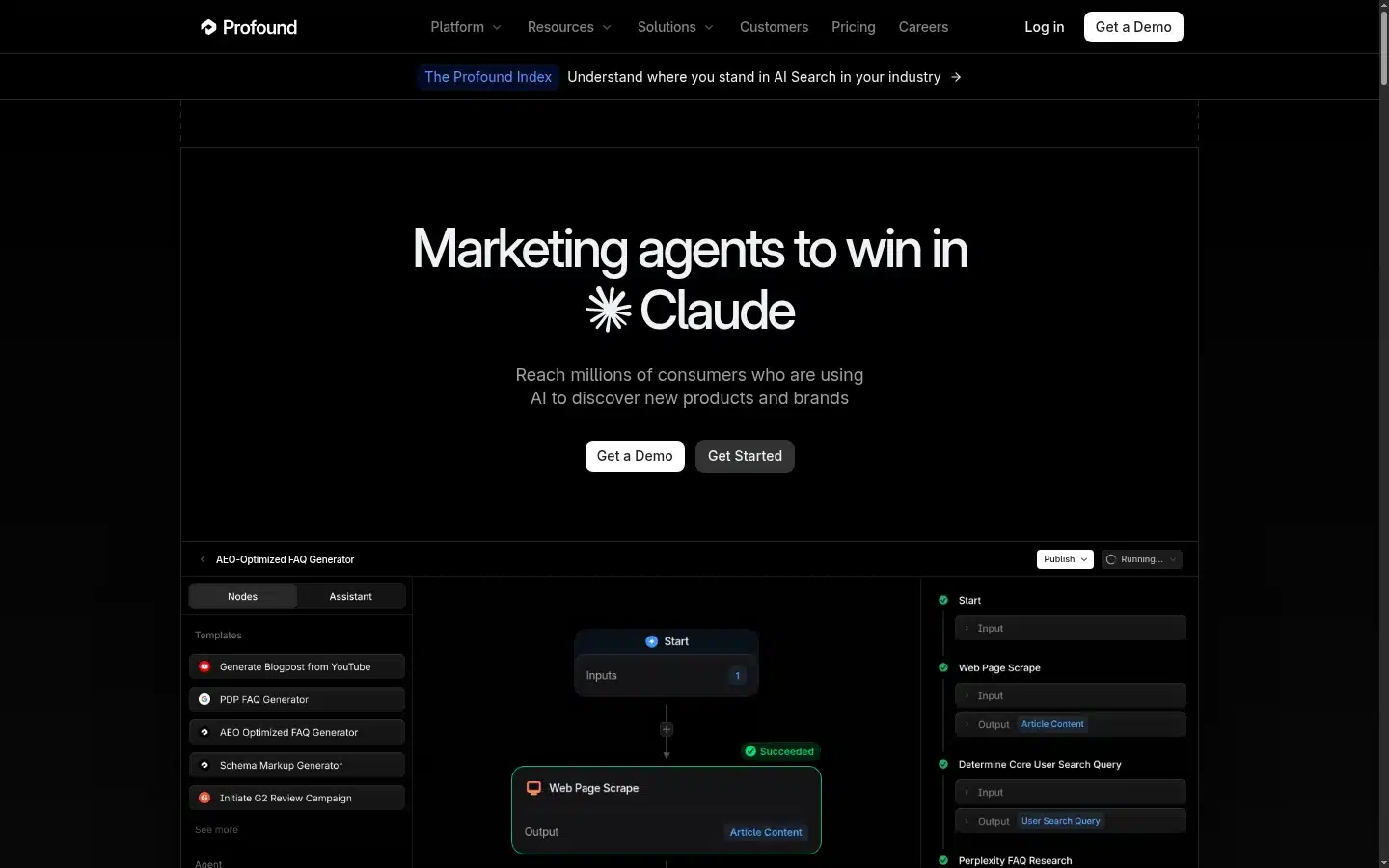
For launches, Profound goes past the text answer into ChatGPT’s shopping layer.
Best for: Launch teams at retail and consumer brands.
Standout: Profound captures each tracked prompt daily, along with the answer, its citation sources, and what It calls front-end results. ChatGPT Shopping tracking shows whether a new product reaches shopping answers, though not on the free trial. Enterprise extends coverage to up to nine engines.
Pros:
- Records answers, citations, and front-end results daily
- Follows products into ChatGPT Shopping on paid plans
- Delivers CSV, JSON, and API access on Enterprise
Cons:
- Self-serve paid pricing isn’t shown
- The trial has no exports and no API
Pricing: Free 7-day trial (50 prompts); Enterprise custom.
Scenario fit: In launch week, Profound tells a consumer brand whether the new product surfaces in ChatGPT’s shopping answers as well as its text answers. The free trial won’t test that, so scope an Enterprise pilot well before release day.
See more of our reporting in Google Top Stories, AI Overviews and AI Mode.
7. Scrunch
Scrunch asks ChatGPT how different buyers would search and scores your placement.
Best for: Content leads planning by funnel stage and buyer persona.
Standout: Persona-based collection shapes prompts around buyer profiles, and placement is reported as top, middle, or bottom of the answer. Core adds five competitors, citations, sentiment, and funnel stages, so you see whether ChatGPT rankings slip for evaluators while holding for researchers.
Pros:
- Groups results by funnel stage
- Compares five competitors on Core
- Monitors ChatGPT alongside Copilot, Perplexity, and Google AIO on Core
Cons:
- After 14 days, prompts default to a 72-hour refresh
- Extra personas and API need Enterprise
Pricing: Core $250/mo for 125 prompts in one country.
Scenario fit: For Job 2, Scrunch shows whether a competitor took the answer for one persona or across the whole funnel, which decides the content response. The 72-hour cadence after a prompt’s first 14 days suits monthly content planning better than launch-week monitoring.
8. Writesonic
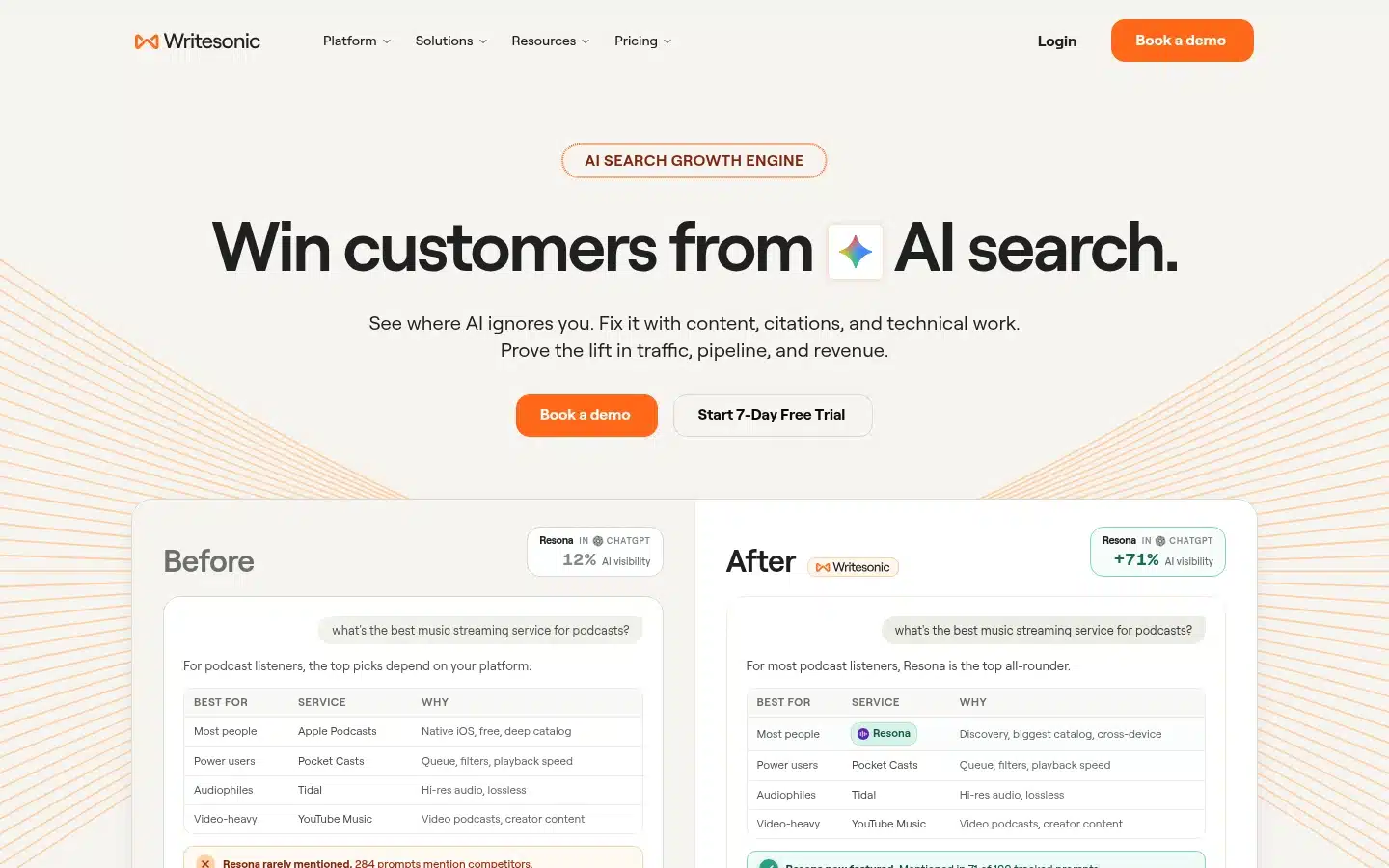
In Writesonic, AI search visibility sits beside the content tooling a team needs to respond.
Best for: Content teams that produce launch material and monitor its pickup in one platform.
Standout: Visibility tracking runs daily alongside ads monitoring, AI article generation, site audits, and an Action Center. Sentiment starts on Growth, which covers ChatGPT, Gemini, and Google AI Overviews. Enterprise opens all eight platforms, alerts, Brand Explorer, Prompt Explorer, and Shopping tracking.
Pros:
- Monitors ads next to organic AI visibility
- Generates articles and runs audits from the same account
- Adds Looker Studio integrations on Enterprise
Cons:
- Growth tracks three engines
- Alerts are Enterprise-only
Pricing: Growth $399/month, billed annually.
Scenario fit: Writesonic fits Job 1 for content teams that write launch pages, then check whether ChatGPT picks them up, with ads monitoring in the same view. Comms teams that only need to monitor ChatGPT rankings would be paying for content tools they won’t use.
Where brand and comms teams should start
Start with SE Visible as the shared record for all four jobs, each backed by the unedited ChatGPT answer. Add one specialist only when one job outweighs the rest of your ChatGPT rankings work: Bluefish or Goodie in accuracy-heavy categories, Brandlight for earned-media programs.
Skip if:
- Writesonic, when your team wants monitoring alone: much of the platform is built for content production.
- Evertune, when procurement needs export and API access documented before signing: neither is stated on its public pages.
ChatGPT rankings FAQ for brand teams
How can I see what ChatGPT says about my brand?
Ask ChatGPT your buyers’ questions repeatedly. Start by tracking brand mentions in AI search with a fixed prompt set, checked daily in one market. Stored answers show where the brand sits in ChatGPT rankings, how it’s described, and which pages are cited.
What can you do when ChatGPT gets your brand facts wrong?
Trace the wrong claim to its source page and fix it there. Update your own pages, ask third-party publishers to correct details, and keep OAI-SearchBot unblocked so corrected pages can be cited. Then recheck the same prompts against the stored answers.
Why does ChatGPT recommend a competitor instead of my brand?
ChatGPT draws on training data and the pages it retrieves. When reviews, comparison articles, and trade press keep naming a rival for the qualities buyers ask about, that rival earns the mention. To move your ChatGPT rankings, you need to earn a place on those cited pages.
You Might Also Like:

AI Visibility Monitoring Tools

Best AI SEO Tools

AI Content Gap Analysis Tools