
Copyleaks AI Detector Review 2026: Accuracy, Pricing and False Positives
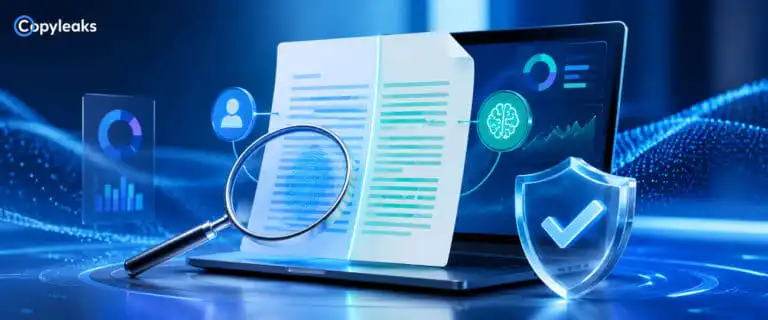
Copyleaks AI Detector is one of the strongest AI-detection tools in 2026, especially for education teams, publishers, agencies, and businesses that need AI detection, plagiarism checking, API access, and reporting in one place. It is not a magic truth machine. The sensible way to use it is as a risk signal to support human review, not as final proof that someone used ChatGPT, Gemini, Claude, or another AI model.
This Copyleaks AI Detector Review covers accuracy, false-positive risk, pricing, how the tool works, how to use it, where it beats lighter, free AI-detection tools, and where alternatives such as Turnitin, GPTZero, Originality.ai, and QuillBot may fit better. The key trade-off is simple: Copyleaks has a stronger professional feature set than most casual AI checkers, but the higher-value plans make most sense when detection is part of a repeatable workflow.
| Review area | DIY AI verdict |
|---|---|
| Overall rating | 4.2/5 stars |
| Best for | AI detection, plagiarism checking, education workflows, publishing teams, API-based content checks |
| Weakest area | False-positive risk if results are treated as proof rather than evidence |
| Free plan value | Useful for testing short or occasional checks, but limited for serious workflows |
| Paid plan value | Best for teams that need repeatable scanning, reporting, plagiarism checks or integrations |
| Recommended? | Yes, with a clear human review process |
What is Copyleaks AI Detector?
Copyleaks AI Detector is a content authenticity tool that checks whether text appears likely to be AI-generated. It is commonly used as a Copyleaks AI content detector, AI checker, plagiarism checker companion, and AI detection API for platforms that need to scan user-submitted content at scale.
It sits beside the AI writing market rather than inside it. Our best AI writing tools ranking compares tools for text generation and editing. Copyleaks does the opposite: it reviews finished text and tries to identify whether the writing pattern appears machine-generated, human-written, paraphrased, plagiarised, or mixed.
A writing tool is judged on output quality, tone control and drafting depth. An AI detector should be judged on detection usefulness, false-positive handling, reporting clarity, integration options and whether the result helps a reviewer make a better decision. Copyleaks is strongest when the reviewer understands those limits. If AI detection (and improvement) is what you came here for, then check out our free course on how to improve and humanise AI content.
Copyleaks AI Detector scorecard
Copyleaks is not included in the main DIY AI text-generation leaderboard because it is not a generative writing platform. For this review, we adapted the closest relevant internal scoring metrics: fact accuracy, output usefulness, speed, integration ease, cost efficiency, multilingual support and workflow fit. Creativity and tone adaptability are not scored because they do not apply to an AI detector.
| Metric | Score | What this means in practice |
|---|---|---|
| Detection usefulness | 8.8/10 | Strong for longer, structured text where the user needs a practical AI probability signal. |
| False-positive handling | 8.2/10 | Better than many casual AI checkers, but still needs human review before any serious decision. |
| Report clarity | 8.4/10 | Useful enough for editorial and education workflows, especially when paired with plagiarism checks. |
| Integration ease | 9.1/10 | API, LMS and document workflow support make it stronger for institutions and platforms. |
| Cost efficiency | 7.4/10 | Good value for teams, weaker value for casual users who only need occasional scans. |
| Multilingual support | 8.6/10 | Broader than many lighter AI detectors, though English remains the safest evaluation language. |
| Overall review score | 8.5/10 | A serious AI detector for repeatable workflows, not a perfect authority on authorship. |
Is Copyleaks AI Detector accurate?
Copyleaks makes strong accuracy claims, and its own published testing materials position it as one of the more accurate AI detectors. The more useful question is not simply “is Copyleaks AI Detector accurate?” but “accurate enough for which decision?”
For content teams, Copyleaks can be genuinely useful. If a batch of articles, product descriptions or student submissions comes back with a high AI likelihood, the result gives reviewers a place to look more closely. It can also help spot patterns across repeated submissions. That is valuable.
For accusations, penalties or high-stakes decisions, the bar is much higher. AI detection has a known false-positive problem across the category. Human-written text can be predictable. Non-native English writing can sometimes look formulaic. Heavily edited AI text can look more human. Templated corporate copy, legal clauses, product specifications and basic definitions can also confuse detectors because there are only so many natural ways to write them.
The fairest verdict is this: Copyleaks is one of the better AI detection tools, but no AI detector should be used as the sole evidence that a person cheated, copied, or misrepresented their work. For a useful reality check, OpenAI’s own AI text classifier notes explain why AI detection should support, rather than replace, human judgment.
How does Copyleaks detect AI content?
Copyleaks does not check a secret ChatGPT database to see whether a paragraph came from a specific prompt. AI detectors generally work by analysing patterns in the text itself. They look for statistical signals, phrasing regularities, sentence structure, predictability, token distribution and other features that may differ between human-authored and machine-generated writing.
This is why people search for “why does Copyleaks detect AI?” after a piece of human writing gets flagged. The detector is not reading the intention. It is making a classification based on learned patterns. If your writing is highly standardised, very polished, repetitive, unusually neutral, or close to common AI phrasing, it may trigger a higher score even when the underlying work is yours.
That does not make the tool useless. It means the result needs context. A flagged paragraph should lead to a review of source notes, draft history, citations, prompt disclosure policies and the actual quality of the writing. It should not automatically lead to an accusation.
Main Copyleaks AI Detector features reviewed
AI detection for ChatGPT, GPT-5, Gemini, Claude and other models
Copyleaks markets its detector as covering major model families, including OpenAI, Gemini, Claude, DeepSeek and similar generative systems. In practical terms, this matters because buyers do not want a detector that only recognises one model from two years ago. The tool needs to adapt as writing models change.
The trade-off is that model coverage is still a moving target. AI writing systems keep improving, and humanisers or paraphrasers can change the surface pattern of a draft. A detector may still identify suspicious structure, but the more heavily edited the text becomes, the harder the judgment gets.
Plagiarism checker alongside AI detection
Copyleaks is more useful than a basic AI checker because it also closely aligns with plagiarism detection. That matters for schools, universities, publishers and agencies. A document may not be fully AI-generated, but it may still contain copied passages, paraphrased source material, or sections that need attribution.
This is one of Copyleaks’ better practical advantages. AI detection alone can become a narrow and sometimes misleading conversation. Originality is broader. A combined AI and plagiarism review is usually more useful than asking a single yes-or-no question about whether a text came from a machine.
API and LMS integrations
Copyleaks is stronger for institutions and platforms than for one-off users. The API, LMS support, and workflow integrations are a major reason it appears in serious buying discussions. A school, publisher, SaaS platform or enterprise content team may need automatic scanning, report storage, user permissions and repeatable review steps.
Casual users do not need all of that. If you only want to paste in a blog intro once a month, a simpler AI detector free tool may be enough. If you need a detector embedded inside submission flows, content moderation, internal compliance or editorial QA, Copyleaks becomes more compelling.
AI image detection and wider content integrity
Copyleaks has also expanded beyond plain text. That broader content-integrity direction is useful for organisations dealing with synthetic images, manipulated submissions, or mixed-media workflows. For this review, the main focus remains the Copyleaks AI Detector for text, but the broader product direction makes it more relevant for enterprise buyers than a small standalone checker.
Copyleaks AI Detector pricing in 2026
Copyleaks pricing is split between self-serve plans and custom education or enterprise arrangements. The public pricing page lists a Personal plan and a Pro plan, with lower effective monthly pricing when paid annually. Education, enterprise, API access and LMS use typically require a custom quote.
| Plan type | Best fit | Value judgement |
|---|---|---|
| Free access | Quick AI checker tests and occasional short scans | Good for trying the interface, not enough for a serious review workflow. |
| Personal plan | Students, freelancers, individual writers and small-site owners | Reasonable if you scan regularly and want AI detection plus plagiarism support. |
| Pro plan | Content teams, agencies, publishers and higher-volume users | Better fit when several people need repeatable checks and reporting. |
| Education or enterprise | Universities, schools, platforms, compliance teams and LMS workflows | Worth considering where integration, governance and audit trails matter. |
The buying mistake is choosing Copyleaks because it has the strongest feature list, but then using it twice a month. If the workflow is light, start free or use a cheaper checker. If the workflow is recurring, the paid plans make more sense because the value comes from consistency, not from a single scan.
Pros and cons
| Pros | Cons |
|---|---|
| Strong mix of AI detection and plagiarism checking in one workflow. | Results can be misused if reviewers treat scores as final proof. |
| Better suited to education, publishing and enterprise workflows than most lightweight AI checkers. | Paid plans are harder to justify for occasional personal use. |
| API and LMS options make it practical for platforms and institutions. | Short, generic, templated or heavily edited text can still be difficult to judge. |
| Useful for checking mixed authorship, paraphrasing risk and originality issues. | Any AI detector can struggle against careful human editing and paraphrasing tools. |
| High-stakes use needs clear policy, appeal routes, and supporting evidence. | High-stakes use needs a clear policy, appeal routes, and supporting evidence. |
Copyleaks vs alternatives
| Tool | Best for | Main strength | Main trade-off |
|---|---|---|---|
| Copyleaks AI Detector | Education, publishing, API workflows, plagiarism, plus AI detection | Professional feature set and integration options | Can be overkill for casual users |
| Turnitin AI Detector | Schools, colleges and universities already using Turnitin | Academic workflow fit | Less relevant for general publishers and non-education businesses |
| GPTZero | Education-focused AI detection and quick checking | Accessible AI detection workflow | Still needs careful interpretation and policy support |
| Originality.ai | SEO teams, publishers and content agencies | Content publishing use case and originality checks | Less institution-focused than Copyleaks or Turnitin |
| QuillBot AI Detector | Students and casual writing checks | Easy to access alongside paraphrasing and grammar tools | Not as strong for enterprise review processes |
If your main concern is improving a draft rather than policing it, read our QuillBot review. If your concern is AI-to-human rewriting claims, our Walter AI Humaniser review is the more relevant comparison. Copyleaks is best viewed as a detection and originality layer, not as a writing improvement tool.
How to use Copyleaks AI Detector properly
- Scan enough text. Very short samples are less useful. Longer passages give any detector more context to analyse.
- Check the document type. Essays, blog posts and opinion pieces are easier to judge than legal clauses, product specs or templated reports.
- Look at flagged sections, not just the headline score. A useful review focuses on where the detector is concerned and why.
- Compare against draft history. Version history, notes, outlines, and source documents matter more than a single AI score.
- Pair AI detection with plagiarism review. A text can be human-written but copied, AI-assisted but properly disclosed, or mixed in ways that need nuance.
- Create an appeal route for serious decisions. In education or HR contexts, never let a detector score become the whole process.
This is also the right answer to “Copyleaks AI Detector: How to use”. Paste-and-panic is the wrong workflow. Scan, inspect, compare, ask for context, then decide.
How to respond if Copyleaks flags your writing as AI
A false positive can happen with any AI detector. If Copyleaks flags your work, do not start by trying to “beat” the detector. Start by proving authorship in a normal, boring, verifiable way.
Keep outlines, notes, source links, document history and earlier drafts. Explain where AI was used, if it was used. If you used Grammarly, a paraphraser, a translation tool or a rewriting assistant, disclose that rather than pretending the text appeared fully formed. The more transparent your writing process is, the less weight a single detector result should carry.
For site owners and content teams, the same rule applies. Do not obsess over a green AI checker result. Build a better editorial process. Assign clear briefs, require source notes, use human editing, check claims, and compare drafts against your house style. Our AI text generation guide covers tools and workflows for improving writing quality rather than chasing detector scores.
Can you beat Copyleaks AI Detector?
People search for “how to beat Copyleaks AI Detector”, but that is usually the wrong framing. Trying to bypass an AI detector with a humaniser, spinner or paraphrasing loop often produces worse writing. It may also create a bigger problem if the context is academic, legal, employment-related or client-facing.
The legitimate way to reduce the risk of AI detection is to make the work genuinely yours. Add original analysis. Use specific examples. Keep your source trail. Remove vague AI phrasing. Rewrite sections because they are weak, not because a detector disliked them. If AI helped with brainstorming or drafting, make sure the final piece reflects human judgment, contains accurate claims, and follows a defensible editorial process.
That approach is slower than pressing a humanise button, but it is far safer. It also produces better work.
See more of our reporting in Google Top Stories, AI Overviews and AI Mode.
Who should use Copyleaks AI Detector?
Best for education teams
Copyleaks is a serious option for education teams that need AI detection, plagiarism checks, and workflow integration. The key requirement is policy. Students and staff need to know how AI assistance is defined, what counts as acceptable use, what evidence is reviewed, and how disputes are handled.
Best for publishers and agencies
For publishers, Copyleaks can help spot low-effort AI submissions, outsourced-content risks, and originality issues before publication. It should sit inside editorial QA rather than replace it. A detector can flag a suspicious article, but it cannot decide whether the analysis is useful, accurate or worth publishing.
Best for platforms and enterprise buyers
The API and governance angle make Copyleaks more interesting for platforms that handle user-generated content, internal knowledge, compliance reviews or content moderation. If scanning needs to happen automatically, Copyleaks is much more suitable than a manual browser-only checker.
Not ideal for very casual users
If you only need a free AI detector once in a while, Copyleaks may still be useful, but you may not need the paid product. Casual users should test the free allowance first and compare it with lighter tools before committing.
Buying guide: Which Copyleaks plan should you choose?
Start with the workflow, not the feature list. If you are an individual checking documents occasionally, use the free option first and upgrade only if you often hit limits. If you are a freelancer or small publisher, the Personal plan may be enough if AI detection and plagiarism checks are part of your normal review process.
Choose the Pro plan only if volume, reporting or team usage justifies it. For institutions, SaaS platforms and enterprise buyers, skip the self-serve comparison and speak to sales about API, LMS, data handling and security requirements. That conversation matters more than the monthly headline price.
Also, decide in advance how results will be used. Will a high AI score block publication? Trigger manual review? Require source notes? Ask for a revision? The answer should be written down before the tool goes live. Otherwise, AI detection quickly becomes inconsistent and unfair.
Final verdict: Is Copyleaks AI Detector worth it in 2026?
Copyleaks AI Detector is worth using in 2026 if you need more than a quick AI checker. Its strongest case is the value of a professional workflow: AI detection, plagiarism checking, reporting, API options, LMS support, and broader content integrity features on a single platform.
The weakness is not that Copyleaks is unusually poor. The weakness is the AI detection category itself. False positives, edited AI text, short samples, multilingual edge cases and formulaic human writing all make certainty difficult. That is why the best buyers will use Copyleaks as part of a review process, not as a judge.
For publishers, agencies, schools, and platforms, Copyleaks is one of the more credible AI detection options. For casual users, try the free checker first. For high-stakes decisions, never rely on the score alone.
FAQs
Is Copyleaks AI Detector accurate?
Copyleaks is one of the stronger AI detection tools, especially for longer text and professional review workflows. It should still be treated as a probabilistic signal, not as absolute proof that AI wrote the text.
How accurate is Copyleaks AI Detector?
Copyleaks publishes strong accuracy claims, but real-world accuracy depends on text length, language, writing style, editing, paraphrasing and the type of document being checked. Short or formulaic text is harder to judge reliably.
Why does Copyleaks detect AI in human writing?
Copyleaks may flag human writing if the text is highly predictable, repetitive, over-polished, heavily templated, translated, or edited by writing software. A flag means the text resembles AI patterns, not that authorship has been proven.
How does Copyleaks detect AI content?
Copyleaks analyses linguistic and statistical patterns associated with AI-generated text. It does not know the writer’s intention and does not prove that a specific tool produced the content.
Is Copyleaks AI Detector free?
Copyleaks offers free scanning access, which is useful for testing the tool. Higher-volume use, team features, API access and institutional workflows usually require a paid or custom plan.
Can Copyleaks detect ChatGPT, GPT-5, Gemini and Claude?
Copyleaks is designed to detect writing patterns associated with major AI models, including OpenAI, Gemini, Claude and other model families. Detection gets harder when text has been heavily revised, paraphrased or mixed with human writing.
Is Copyleaks better than Turnitin AI Detector?
Turnitin is strongest for institutions that already use it in academic workflows. Copyleaks is broader, with strong API, plagiarism, and content-integrity use cases beyond education. The better choice depends on where detection needs to happen.
Can you beat Copyleaks AI Detector?
The safer approach is not to bypass the detector. Make the work genuinely original, keep draft history, cite sources properly, disclose AI help where required, and edit for substance rather than chasing a lower AI score.
Does Copyleaks check plagiarism too?
Yes. One of Copyleaks’ advantages is that AI detection can sit alongside plagiarism and originality checks, which is more useful than a simple AI-only result.
Who should avoid Copyleaks?
Very casual users who only need occasional free AI checks may not need a paid Copyleaks plan. Teams without a clear review policy should also pause before using any AI detector in serious decisions.
You Might Also Like:

Best AI Writing Tools 2026
Quillbot Review 2026

Best AI Detection Tools

The AI Detector from Undetectable.ai is easy to use and delivers results in just a few seconds.
Thanks for the comment Darius – we will be sure to check it out, and see how it compares to Copyleaks.